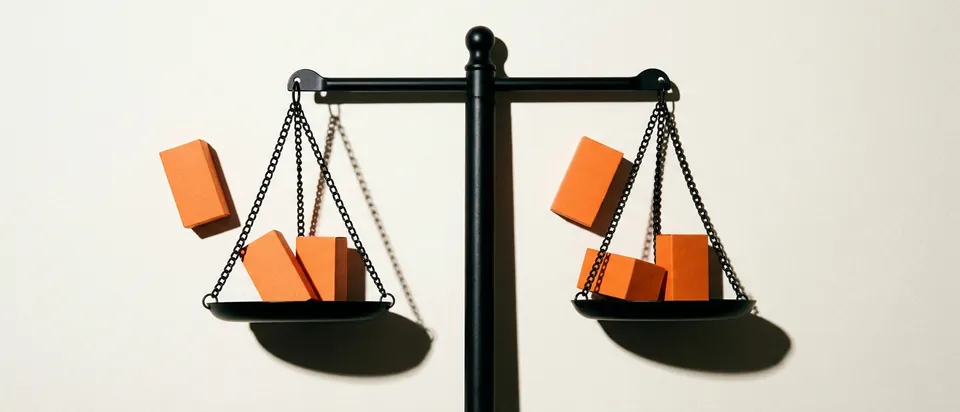
Fair use, written into the Copyright Act as 17 U.S.C. 107 in 1976, lets people use copyrighted work without permission in some situations. Courts decide it case by case by weighing four factors: the purpose of the use, the nature of the work, how much was taken, and the harm to the original's market.
Fair use is the part of copyright law that makes room for criticism, news, teaching, parody and research. It is also the most misunderstood part. People often treat it as a rule with fixed limits, like a word count or a percentage. It is not. It is a defense that a court weighs after the fact, using four factors that Congress listed in section 107 of the Copyright Act.
This page is part of our copyright basics and FAQ section. It walks through the four factors, explains how the Supreme Court tightened the idea of a "transformative" use in 2023, lists situations where fair use often comes up, and then applies the factors to the question many creators now ask: is training an AI system on their work fair use?
01The four factors
Section 107 says that using a work "for purposes such as criticism, comment, news reporting, teaching (including multiple copies for classroom use), scholarship, or research, is not an infringement of copyright." It then lists four factors a court must consider. No single factor decides the case, and courts may weigh other facts too.
- Purpose and character of the use. Is the new use commercial or nonprofit and educational? Does it add something new with a different purpose, or does it simply stand in for the original?
- Nature of the copyrighted work. Using factual work, such as a news report or a technical manual, is easier to justify than using highly creative work such as a novel, a song or a painting. Unpublished work gets extra weight, though the statute says that alone does not rule out fair use.
- Amount and substantiality of the portion used. Less is usually safer, but quality matters as much as quantity. Taking the most memorable part of a work can weigh against fair use even if it is short.
- Effect on the potential market. Would the new use replace sales of the original, or take away a licensing market the owner would normally control? Courts often treat this factor as very important.
The 1976 law did not invent fair use. Courts had applied it for more than a century, and the House committee report printed with section 107 says the section was meant "to restate the present judicial doctrine of fair use, not to change, narrow, or enlarge it in any way."
Why there is no safe percentage
You may have heard that 10 percent, or 30 seconds, or 250 words is always fair. Those numbers come from voluntary classroom copying guidelines that publishers and educators agreed in 1976, and even those guidelines describe themselves as a minimum, not a ceiling. A court can find a short use unfair, or a long one fair, depending on the other factors.
02Transformative use after Warhol
For about 30 years, the key word in fair use cases was "transformative." It comes from Campbell v. Acuff-Rose Music, decided by the Supreme Court on March 7, 1994. In that case the rap group 2 Live Crew recorded a parody of Roy Orbison's "Oh, Pretty Woman." The Court held that a commercial parody can be fair use, and it asked whether the new work "adds something new, with a further purpose or different character."
Many lower courts then read "transformative" broadly. If an artist changed the look or meaning of a work, that often won the first factor. The Supreme Court narrowed that reading in Andy Warhol Foundation v. Goldsmith, decided May 18, 2023.
What Warhol decided
Lynn Goldsmith photographed the musician Prince in 1981. Andy Warhol later made a series of silkscreen images based on her photo. In 2016 the Warhol Foundation licensed one of them, "Orange Prince," to a magazine for a cover about Prince. Goldsmith had licensed her own photos to magazines for the same kind of use.
The Court held, 7 to 2, that the first factor weighed against the Foundation for that specific license. Its syllabus says that if an original work and a secondary use "share the same or highly similar purposes, and the secondary use is commercial, the first fair use factor is likely to weigh against fair use, absent some other justification for copying."
What changed for everyone else
- New look is not enough. Adding a new style or meaning does not by itself win the first factor. The question is whether the purpose of the use is different from the original's.
- Each use is judged separately. The Court looked only at the 2016 magazine license, not at Warhol's original creation of the series. The same copying can be fair for one purpose and unfair for another.
- Commentary on the original still counts. Parody and criticism that target the original work keep a strong claim, because they need to borrow from it to make their point.
03Common fair use situations
Section 107 names criticism, comment, news reporting, teaching, scholarship and research as examples. Here is how the factors tend to play out in everyday situations. These are tendencies, not guarantees.
| Situation | Often leans toward fair use when | Often leans against when |
|---|---|---|
| Book or film review | Short quotes or clips support the critique | Long excerpts replace the experience of the work |
| Parody | The new work comments on the original itself | The original is borrowed only to sell something unrelated |
| Classroom use | Limited excerpts serve a specific lesson | Whole textbooks or workbooks are copied instead of bought |
| News reporting | A brief portion is needed to report the story | The report copies the heart of an unpublished work |
| Search and indexing | The use helps people find works, not read them in full | Full copies are made available to the public |
Teachers face this question often. Our guide for teachers on classroom copying explains how fair use sits next to the specific classroom exemptions in section 110. Brand names and logos raise a different set of rules, which we cover in how copyright differs from trademark.
04Fair use and AI training
AI training is now the largest fair use question in copyright. Building a generative AI model usually means copying large numbers of books, images, songs or articles into a training set. Whether that copying is fair use is being argued in courts across the United States.
The US Copyright Office gave its view in Part 3 of its Copyright and Artificial Intelligence report, released in pre-publication form on May 9, 2025. As of October 2026 that version is still marked pre-publication. The Office said: "The Office expects that some uses of copyrighted works for generative AI training will qualify as fair use, and some will not."
The four factors applied to training
- Purpose. Training a model for research or analysis that does not reproduce the works is the strongest case. Training a model to produce content that competes with the works it learned from is weaker, especially after Warhol's focus on similar purposes.
- Nature. Training sets are full of highly creative work, which weighs somewhat against fair use.
- Amount. Training usually copies whole works. Courts have sometimes accepted whole copying when it is needed for a different purpose, such as building a search index.
- Market effect. This is where the hardest arguments sit: lost licensing deals, and AI outputs that compete with the original creators.
The same report describes the two ends of the range. Noncommercial research that does not let works be reproduced in outputs is "likely to be fair," while copying "expressive works from pirate sources in order to generate unrestricted content that competes in the marketplace, when licensing is reasonably available, is unlikely to qualify as fair use."
Federal courts began ruling on training cases in 2025, with results that turn on the facts of each case. Our page on whether AI companies can train on your work covers those rulings, settlements and opt-outs. For a longer legal analysis, see this essay on fair use in the age of AI.
05Myths about fair use
A few beliefs come up again and again. None of them is a rule.
- "Giving credit makes it fair use." Credit is good practice and can matter for plagiarism, but it is not one of the four factors. You can credit a photographer and still infringe.
- "Nonprofit or educational use is always fair." It helps under the first factor, but copying a whole workbook for a class can still fail.
- "If I am not making money, it is fine." Market harm can happen even when the copier earns nothing, for example by giving away copies that people would otherwise buy.
- "There is a safe number of seconds or words." No statute or Supreme Court case sets one.
- "A disclaimer protects me." Writing "no copyright infringement intended" does not change any of the four factors.
- "Fair use is a right I can register or claim in advance." It is a defense. In practice it is decided only if a dispute reaches a court.
If real money, a takedown or a lawsuit is involved, talk to a lawyer licensed where you live. Many law schools and arts organizations run free or low-cost clinics for creators.
Where the law is still moving
The biggest open question is how the fourth factor applies to AI. Courts and the Copyright Office are still working out whether lost licensing income, and AI outputs that compete in the same market as the training works, count as market harm. Expect appeals court decisions over the next few years to shape the answer.
Sources
- 17 U.S.C. 107, Limitations on exclusive rights: Fair use
Legal Information Institute, Cornell Law School · 30 October 2026 - Andy Warhol Foundation for the Visual Arts, Inc. v. Goldsmith, No. 21-869
Supreme Court of the United States · 18 May 2023 - Campbell v. Acuff-Rose Music, Inc., 510 U.S. 569
Legal Information Institute, Cornell Law School · 7 March 1994 - Copyright and Artificial Intelligence, Part 3: Generative AI Training (pre-publication version)
US Copyright Office · 9 May 2025
How we pick and check these: our editorial method.
07Questions people ask
Is fair use the same in other countries?
No. Fair use is a US doctrine. The UK, Canada and Australia use narrower "fair dealing" rules with fixed purposes, and the European Union uses a list of specific exceptions. A use that is fair in the United States may not be allowed elsewhere.
Who decides whether something is fair use?
A court decides, usually after a lawsuit has been filed. A platform reviewing a takedown or a school reviewing a policy can make its own call, but only a judge or jury can rule that a use is fair under section 107.
Can I use a song in my video if I only use a few seconds?
Not automatically. Short clips can still infringe, especially if they use the most recognizable part of a song or the video is commercial. Licensed music libraries are the safer route for most videos.
Does fair use protect memes?
Sometimes. Memes that comment on the original image or on culture can have a strong fair use argument, but using a photo in an advertisement is a different, commercial purpose and is much weaker.